
Gold ETF vs Physical Gold: Best Investment 2026?
Gold ETF vs Physical Gold is a common question among investors today. In India, many people buy physical gold like jewelry or coins. However, modern investors often prefer Gold ETFs as a smarter investment option. Traditionally, gold has been considered one of the safest investment options. For example, many Indians buy gold in the form of jewelry, coins, or gold bars. However, investors are now exploring Gold ETFs as a modern and convenient way to invest in gold.
>Therefore, the big question remains: Gold ETF vs Physical Gold — which is the better investment in 2026?
In this article, we will compare Gold ETF vs Physical Gold, explain how Gold ETFs work, and help you decide which option suits your investment goals.
investment goals.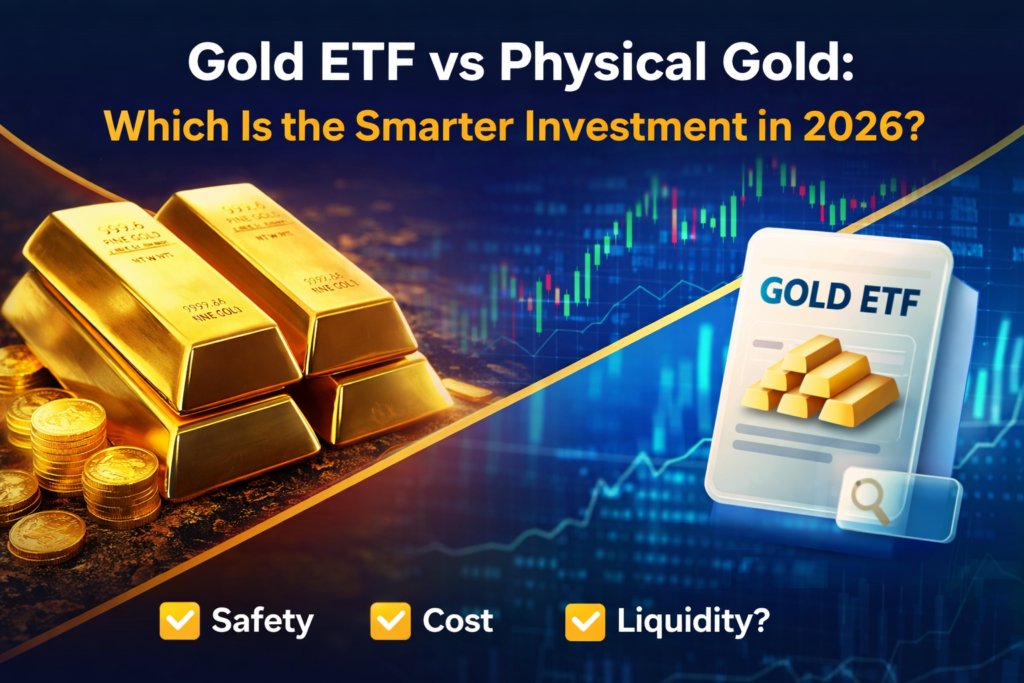
Why Do People Invest in Gold?
Gold has always been known as a safe-haven asset. For example, When financial markets become unstable, many investors move their money into gold.
Some major reasons why people invest in gold include:
-
Protection against inflation
-
Stability during stock market crashes
-
Hedge against currency depreciation
-
Better portfolio diversification
Many financial experts recommend keeping 5–10% of your investment portfolio in gold to reduce risk.
What Is a Gold ETF?
A Gold ETF (Exchange Traded Fund) is a digital way to invest in gold through the stock market.
Instead of buying physical gold, investors buy Gold ETF units through a demat account. Each unit represents high-purity gold (usually equivalent to 24-karat gold).
Moreover The value of a Gold ETF moves according to the current market price of gold.
This means investors can benefit from gold price movements without storing physical gold.
How Gold ETFs Work
Understanding how Gold ETFs work is simple.
-
Investors purchase Gold ETF units through a demat account
-
The asset management company buys 99.5% pure physical gold
-
The gold is stored securely in vaults
-
Finally The ETF price moves according to the market price of gold
Therefore, Gold ETFs provide a transparent and efficient way to invest in gold.
Regulation and Safety
In India, SEBI regulated Gold ETFs.
SEBI ensures that:
-
actual physical gold backs every unit.
-
The gold is stored with approved custodians
-
Regular audits and compliance checks are performed
These regulations make Gold ETFs a safe and transparent investment option.
Minimum Investment in Gold ETF
One major advantage of Gold ETFs is the low investment requirement.
Investors can start investing with ₹500 to ₹1,000, depending on the gold price.
Moreover, Additional benefits include:
-
Easy buying and selling during stock market hours
-
High liquidity
-
No locker or storage cost
Major Gold ETF Providers in India
In India, several financial institutions offer Gold ETFs. For example:
-
SBI Mutual Fund
-
HDFC Mutual Fund
-
ICICI Prudential Mutual Fund
-
Axis Mutual Fund
-
Kotak Mutual Fund
-
Nippon India Mutual Fund
Moreover, these funds are backed by physical gold reserves, which makes them a reliable investment option.
Gold ETF vs Physical Gold
When comparing Gold ETF vs Physical Gold, several important differences appear.
| Feature | Physical Gold | Gold ETF |
|---|---|---|
| Storage | Requires locker | No storage needed |
| Safety | Theft risk | Digitally secure |
| Purity | Needs verification | Assured purity |
| Extra Costs | Making charges + GST | Minimal charges |
| Liquidity | Harder to sell | Easy to trade |
Therefore many investors now prefer Gold ETFs instead of physical gold.
Can You Take a Loan Against Gold ETF?
Yes, investors can pledge Gold ETF units as collateral to obtain loans from banks or financial institutions.
Benefits include:
-
No need to move physical gold
-
Faster loan approval
-
Easy access to emergency funds
Why Gold ETFs Are a Smart Investment
Gold ETFs combine the security of gold with the convenience of digital investing.
Major advantages include:
-
Regulated by SEBI
-
Backed by real gold
-
No theft or storage risk
-
Easy buying and selling
-
Ideal for portfolio diversification
Conclusion
In conclusion, the debate between Gold ETF vs Physical Gold depends on your investment goals. While physical gold is traditional and tangible, however, it comes with storage costs, making charges, and security risks.
On the other hand, Gold ETFs offer a modern and convenient way to invest in gold. Moreover, they provide benefits such as easy buying and selling, better liquidity, and no storage hassle.
Therefore, if you want a flexible and cost-effective gold investment, Gold ETFs may be the smarter choice for modern investors. Overall, adding gold to your portfolio—whether through ETFs or physical gold—can help improve diversification and long-term financial stability.